
Driving on sand isn’t hard, but it isn’t pavement either. The vehicles we rent are set up for it and the permits are already handled — what’s left is technique, and the basics fit on one page. Here they are.
This page focuses on the southern seashore ramps — Bodie Island down through Hatteras and Ocracoke, where our rentals spend most of their time. For the full beach-driving education (airing down, soft-sand technique, every ramp on the banks), our sister site Outer Banks Beach Driving is the deep guide.
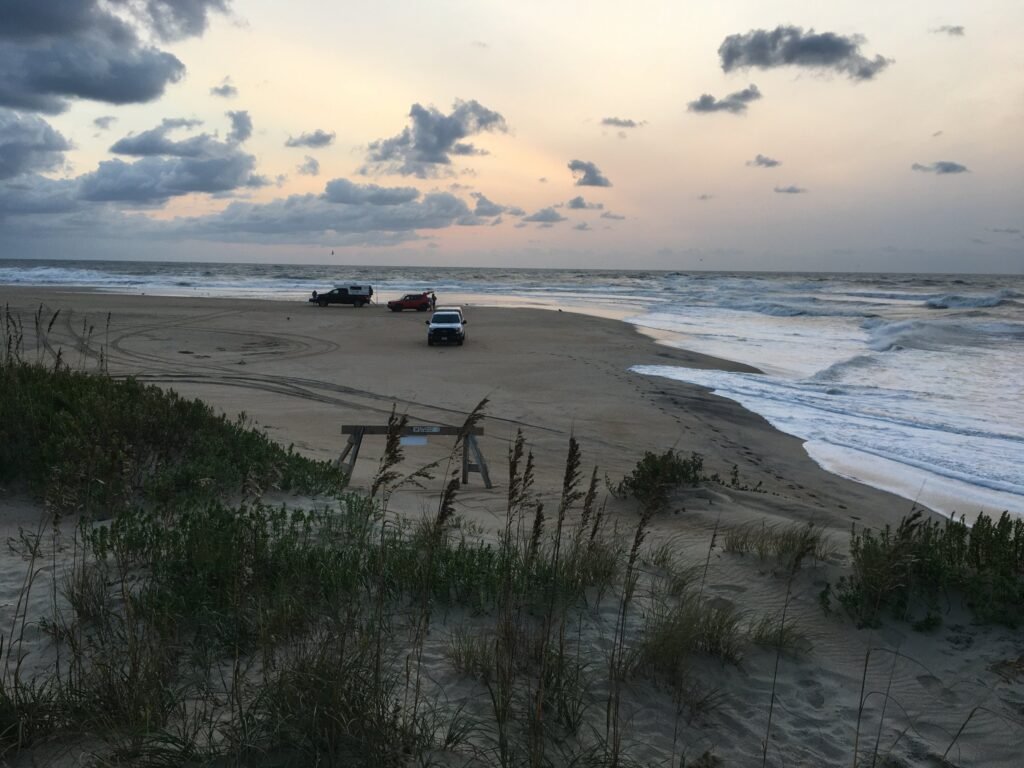
Air Down Before You Hit the Sand
This is the single most important step. Lower your tire pressure to 18–20 PSI before leaving the pavement. Airing down widens the tire’s footprint so it floats over soft sand instead of digging in — most stuck vehicles on these beaches are running street pressure. When your beach day is done, air back up to 38 PSI at an air-up station or with the compressor in the vehicle; there’s free air at the Currituck Beach Lighthouse park in Corolla for the northern beaches.
Engage 4WD Before You Need It
Shift into four-wheel drive on the ramp, before your tires touch sand — not after you’ve started to bog down. Once you’re on the beach, keep steady momentum through soft patches, avoid sudden stops in dry sand, and make your turns wide and gradual. If you do have to stop, pick firmer ground near the waterline.
Read the Beach and the Tide
The beach is widest and firmest at low tide, with packed sand near the water making the easiest driving. At high tide the drivable lane narrows and the soft, dry sand up by the dunes is the hardest going. Check the tide before you plan a long run up the beach, and give yourself margin to get back.
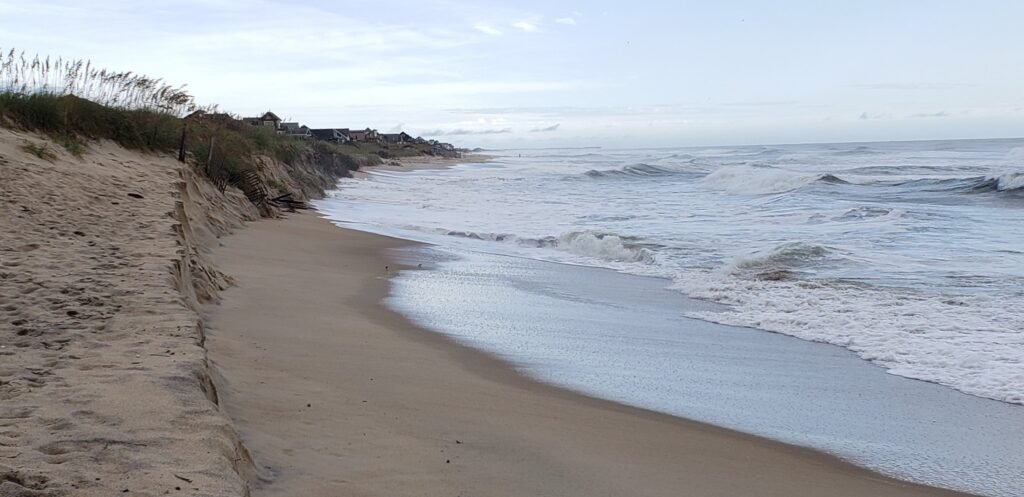
Rules on the Cape Hatteras National Seashore
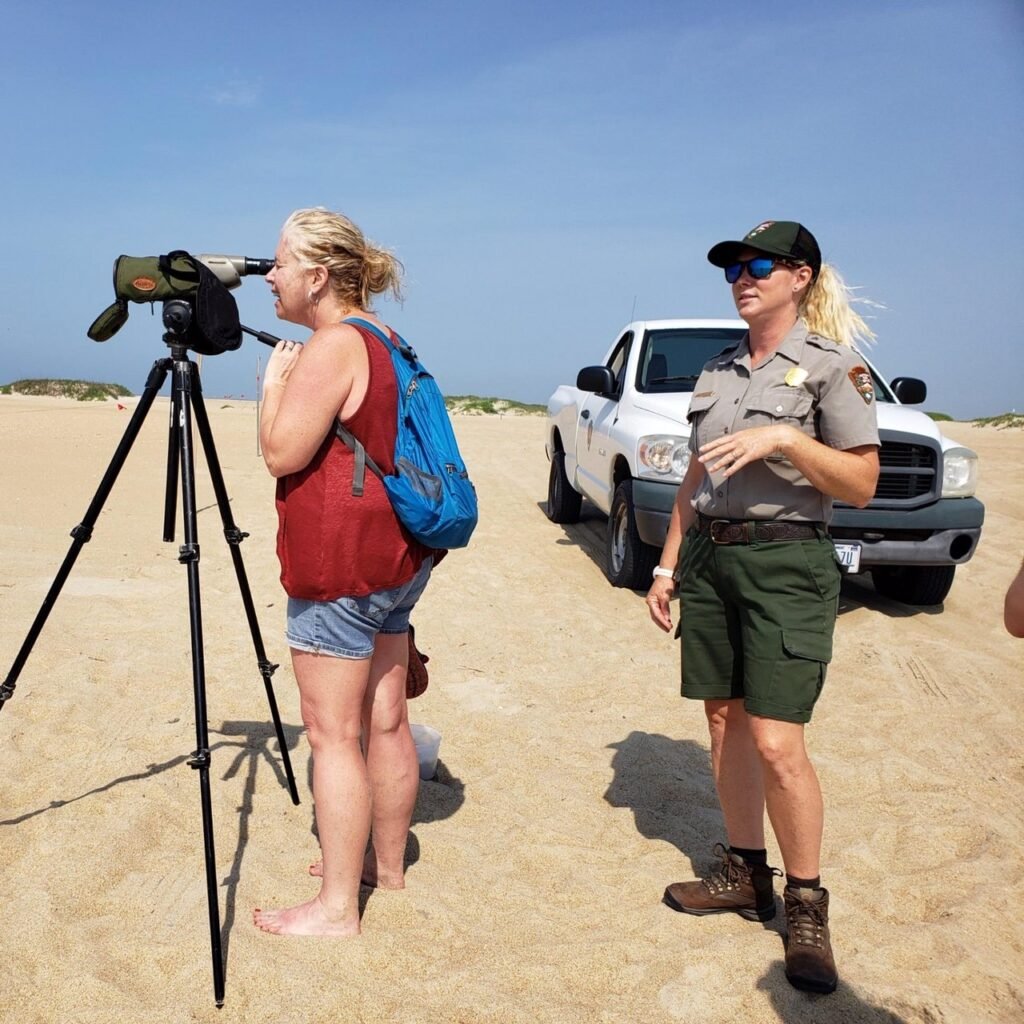
- Drive only on designated ORV routes and enter or leave the beach at the numbered ramps
- The speed limit on seashore beaches is 15 mph unless otherwise posted
- Sections close seasonally to protect nesting birds and sea turtles — obey posted closures, and check current status before you go
- Night driving on seashore beaches is closed May 1 through September 14 for sea turtle nesting
- Dogs are welcome on seashore beaches, leashed
- An ORV permit is required — and it’s already on every vehicle we rent, along with the Corolla permit for the northern beaches
If You Get Stuck
It happens, and it’s usually minor. Every rental carries recovery gear, so a soft patch is a delay, not a disaster: stop before you dig in deep, clear sand from in front of the tires, and ease out with steady, gentle throttle. Spinning the tires only digs the hole deeper.
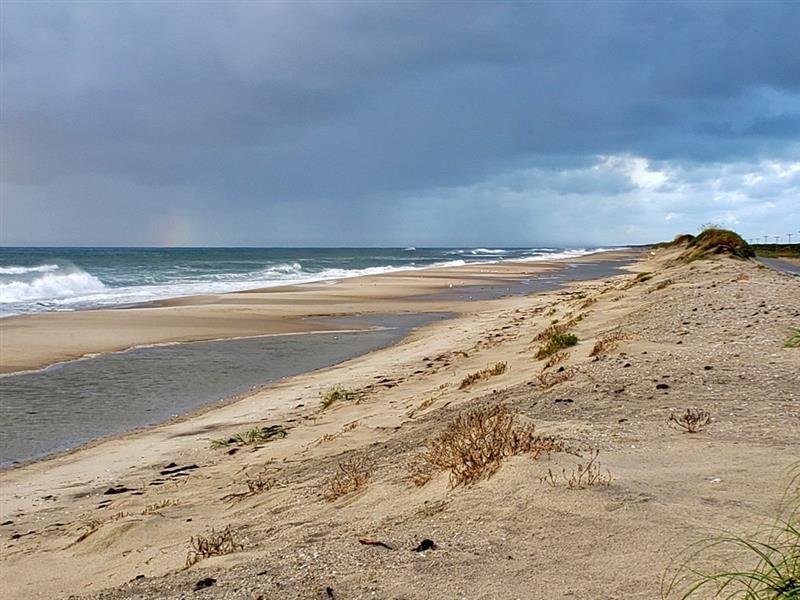
Where This All Applies
The same basics work on both ends of the Outer Banks — the northern beaches through Corolla and Carova and the southern routes through the Cape Hatteras National Seashore to Ocracoke. Every 4x4 we rent is beach-ready for either direction: see the Wrangler, the Gladiator, and the three-row SUVs, with rates on the rental prices page. Questions before your first sand drive? Ask us — we drive these beaches ourselves.